Seed Fundraising Secrets: Lessons from a YC Founder Who Raised $2.5M in Two Weeks
By Karthik Nagapuri · 2026-01-23
Co-authored with WearSynapse.com, the wearable Claude AI Hardware OS I'm building :)
TL;DR
Lalit Kundu, technical co-founder of Delti (YC Spring batch), shared his playbook for raising $2.5M in just two weeks.
The core insights:
- fundraising is a psychology game where momentum beats everything, compress your raise into a two week window anchored around a milestone, sequence meetings from high conversion angels to VCs, and never wait for a lead investor.
- Most importantly, the best fundraising strategy is building something people actually want.
I recently attended a fundraising masterclass by Lalit Kundu, and it completely shifted how I think about raising capital. Lalit is the technical co-founder of Delti, a YC Spring batch company building AI agents for hospital operations. He dropped out of Wharton after realizing business schools don't actually teach you how to build companies, raised $2.5 million in two weeks, and now angel invests in early stage startups through a syndicate with his Big Tech friends.
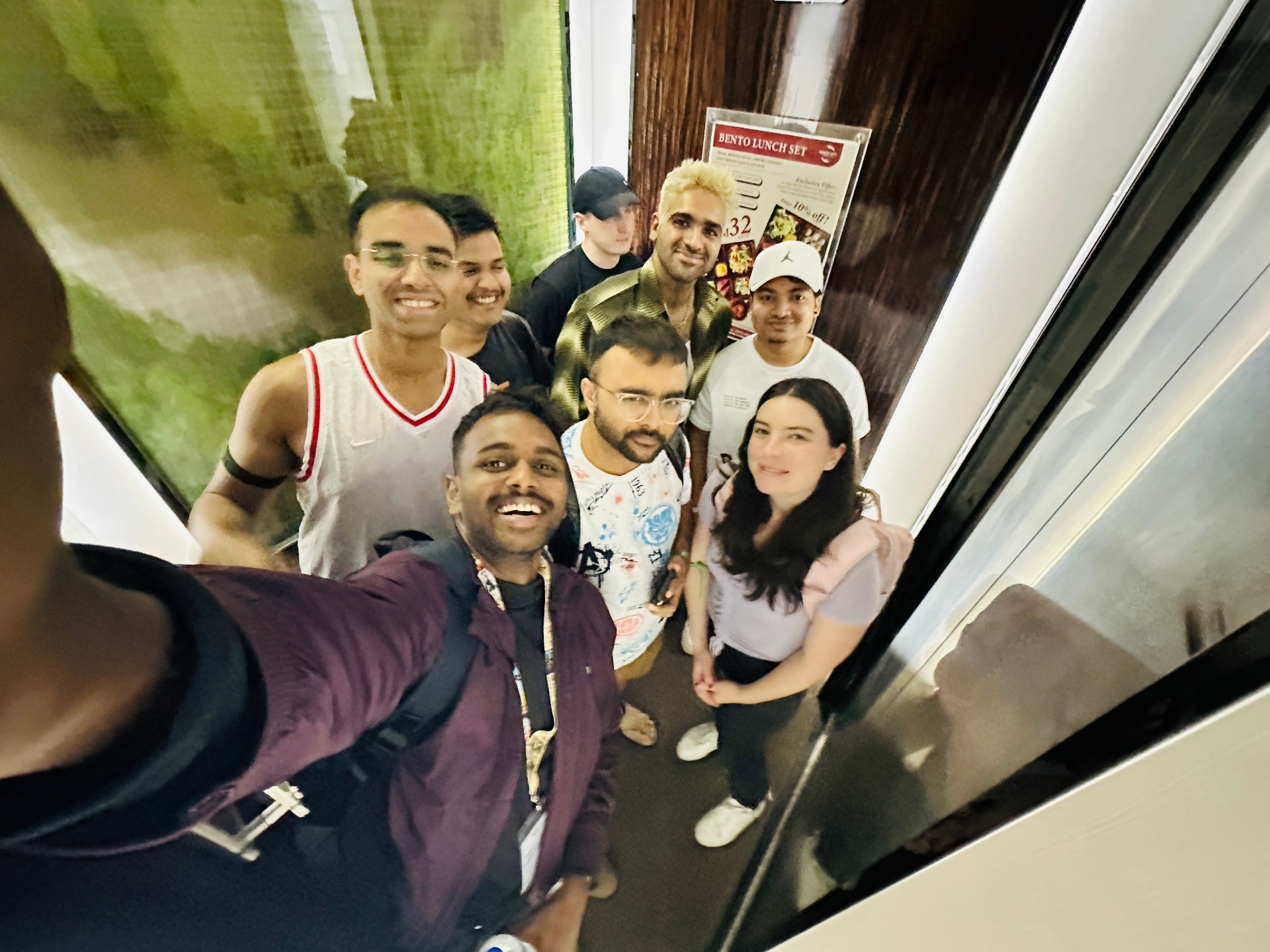
What made this session different from the usual fundraising advice? Lalit didn't sugarcoat anything. He talked about the psychology games, the manufactured urgency, and the brutal reality of demo day, including photos of himself looking progressively more destroyed as the day went on. Here's everything I learned.
Should You Even Raise VC?
Before diving into tactics, Lalit forced us to confront the fundamental question: is venture capital right for you?
"You are trading off ownership of your company for rocket fuel. Like an actual rocket that burns fuel and drops fuselage to go faster, you're giving away parts of your company to accelerate growth."

But that rocket fuel gets you more than just cash. It gets you signal, having Sequoia or YC on your cap table tells the market you've been vetted, helping you attract customers, employees, and partnerships. It gets you network, Lalit has thirty investors on his cap table, many with deep healthcare connections he can tap for introductions. And it creates urgency, with venture money, you either make it to orbit or you crash. There's no floating in the atmosphere.
"Raising money is a great way of limiting how much you're going to lose, and you get a decent three to four year shot at building a billion dollar company. The only risk is opportunity cost."
But there are exceptions. Zapier was so profitable from day one that they never touched the million dollars they raised. That money sat in their bank account while they built a massive company.
Understanding How VCs Think

This is where the session got really interesting. To raise effectively, you need to understand investor psychology.
Venture capital follows a power law. VCs invest in thousands of startups, and 97% of their profits come from less than ten companies. This isn't a game of building nice profitable businesses. It's go billion or go home.
KEY INSIGHT: "What keeps VCs awake at night is not the fact that they invested in 10 bad companies. What keeps them awake at night is that one good company that they did not invest in."
This fear creates herd behavior. Investors want what other investors want. When Lalit tells a VC he has Boldstart on his cap table, they don't do their own diligence, they assume Boldstart already validated him. One investor commits, and suddenly everyone wants in.
"If they pass on a company that everyone else invested in, they look bad. But if everyone passed on a company and it becomes a unicorn, they're like, 'Oh yeah, everyone passed. I'm okay. I'm not embarrassed.'"
What Investors Actually Evaluate
At the pre seed and seed stage, investors look at four things.
Team comes first. Solo founders are generally not preferred, investors want to hedge their bets. If one founder leaves, the other can still run the company. They're also looking at complementary skills. Two technical founders with no one who can sell? Red flag.
"The biggest reason why companies fail at this stage is co-founder breakups. Out of 12 companies I've invested in, two of them already had breakups within six months."
Market size is next, but not the lazy way most founders present it. If you're building a travel planning app and say the travel industry is a trillion dollars, that's meaningless.
"Do a bottom up math to come up with the market size instead of top down. If you need to penetrate more than 5% of the market to reach $100 million ARR, something's wrong."
Traction is flexible at this stage. You might have a waitlist, letters of intent, or early pilots. These aren't equal, but you can construct a compelling narrative. Just be truthful, Lalit has seen deals fall apart because someone confused annualized run rate with annual recurring revenue.
Founder market fit is the final piece. If you're a math PhD wanting to build clinical diagnostic tools for doctors, it makes no sense. You don't have a unique advantage. Solve your own problems.
The "Why Now" Question
This might be the most important part of the session. If you don't have a clear answer to "why now," you're probably working on a tarpit idea.
KEY INSIGHT: "Tarpit ideas are ideas that attract everybody but trap them. They're like a carpet, you think it's stable land you can stand on, but then you go in and you just get sucked into it. It's like a mirage."
A lot of these come from college kids who haven't had real jobs. "Me and my friends want to hang out, but there's no easy way to figure out where to go. Let's build an app!"
"What in the world has changed that this should exist now, but couldn't have existed before? If the world is static, your idea isn't original. You are not the guy who comes up with the idea that no one else has ever thought of. Just accept that fact."
For delti, the answer was simple: AI agents are evolving. It's a new technology. No questions asked. The great companies have been built around changes in the state of the world, new technology, new movements, changes in human behavior, or new regulations.
Building Leverage
Fundraising is a game of leverage. VCs have leverage because they make the decisions and supply the capital. So how do you flip this?
"You are building a rocket ship. That's your leverage. Now the question is, do they realize that? The game is all about creating that leverage."
Lalit's approach is to create scarcity. Investors need to know you're a busy founder building the product, not someone perpetually in the market to raise.
KEY INSIGHT: "You want a two week window where you're going to be raising money. That's your goal. Bring everything into that two week window."
How do you choose this window? Anchor it around a big milestone: a launch, a partnership announcement, coming out of an accelerator. You want to generate inbound interest and create noise in the market.
"When investors reach out to you, play hard to get. Say you're heads down on the product, you have too many customer meetings. They should be meeting on your terms, not on theirs."
Sequencing Your Meetings
Not all investor meetings are equal. Lalit ranked them by conversion rate, from highest to lowest:
Friends and family
Part time angel investors (operators like Lalit who invest on the side)
Full time angel investors
Micro VCs
VC funds
Associates at VC funds
"Associates are basically minions that go around and try to waste founders' time. They can't do anything without screening. They're never going to convert."
The strategy is to line up your meetings in order of conversion rate. Start with friends and family on the first weekend. By the time you take your first VC meeting, you should have $100K closed.
"By the time I went to my first VC meeting, I had $100K closed. That was a great way to say, 'Hey, this is my first VC meeting. I have $100K already from ex colleagues who've seen me work.' And they're like, 'Oh wow, must be great.'"
Sourcing Investor Leads
The best way to get investors is inbound. You want them reaching out to you.
"You don't build leverage by reaching out and begging in their inbox that 'Hey, I'm raising money. Do you want to take a meeting?' No. That sends a very bad signal."

There's one exception: high profile angel investors who would add strategic value. If you're building a dev tool and can get a Supabase co-founder as an angel, that's worth a DM on X. But don't spend more than forty minutes on this.
KEY INSIGHT: "Every founder knows twenty to thirty investors. If a founder friend believes in you, they can help you make intros. And if you have someone already on your cap table, they should be introducing you to five to ten other investors. They're in bed with you. They want you to succeed."
Lalit showed a case study from Fresh, a YC company. Their fundraise took four months for forty investments. But when you look at where the leads came from, a huge portion traced back to a single $5K check that led to introduction after introduction.
Your CRM is Everything
"I had 228 potential investors, out of which I took 120 meetings, and ended up with 39 final investors. You cannot keep that in your head."
He uses a simple spreadsheet: name, where the lead came from, profile, status (meeting set, meeting done, invested). Create a status column and be religious about updating it.
How Much to Raise
The rule of thumb is twenty four months of runway. Do rough napkin math on your burn rate, typically keep it under $50K per month before product market fit.
For dilution, pre seed is usually 5 to 10%, seed is 10 to 15%. Biotech, hardware, pharma, and consumer products have different dynamics, consumer companies often dilute 20 to 25%.
"Raise what you need, not what you can. It's very easy to go over in the momentum. Investors will want to keep investing and you keep diluting your company. It's not worth it."
The Two Sentence Pitch
This is exactly how YC teaches it. Your two sentence description should roll off your tongue in your sleep.
Sentence one: What you do. Clear, no confusion.
Sentence two: Why it matters. This is where you hook them with your most impressive credential or number.
"We're building delti, which is AI agents for automating front office operations for hospitals in the US. We're a team of ex Google AI leaders, we've raised $2.5 million, and we're doing six figures in revenue. Tell me which investor won't get excited about this."
During the session, a few of us pitched our two sentences and got live feedback. The consistent advice: be concise, sell yourself (mention your team's credentials), and pick your most impressive number.
"This is like the snack. The snack needs to be really yummy for them to bite on the meal."
The Pitch Deck
Keep it simple. VCs get twenty decks a day, they're not reading everything.
KEY INSIGHT: "One trick I always use: I read the headings of every slide. Nothing else. It should be a compelling story in itself."
The core elements:
Problem: What pain are you solving?
Solution: How does your technology work?
Why now: What's changed that makes this possible?
Market size: Bottom up math, not "the travel industry is trillion dollars"
Traction: Be truthful about what stage you're at
Team: Who you are and why you're the ones to solve this
Structure the sequence based on what's most compelling. Delti put team first because they had impressive credentials. That might be different for you.
Projecting Confidence
"Paul Graham writes that investors are not always good at judging technology. But they're good at judging founders. So it's important to project confidence. I cannot emphasize this enough. It's going to make or break your fundraise."
How do you build it? First, convince yourself.
"If you're not delusional enough that you're going to change the world, how are you going to convince anyone else? You need to be delusional, and that
always works."
Confident people never ramble. They give direct answers.
Bad answer: "Yeah, you know, we were working on the product, and we're planning to launch in a week, and I talked to some people, they're all ready to use it, so it's gonna be great."
Good answer: "We haven't launched. We don't have any users right now. But we have 50 people on the waitlist."
"You're not there to prove something. You already know. You are building a rocket ship. You are there to bring people that may be worth it on the journey with you."
Reading the Meeting
"If they didn't ask any questions, this is the worst meeting ever. You might be like, 'Oh, I'm such a great explainer. They don't have any questions.' Problem. It's basically a pass."
Try to make it a conversation. Research the investor beforehand. Establish rapport. Understand how their fund invests. Ask questions.
Lalit's evolved approach: "Hey, great seeing you. Love the small talk, but we gotta get to business. There's a few ways we can do this, I can show you the product, walk through a pitch deck, or we can just have a conversation. What do you prefer?"
"Most of them would still want the slides. But it tells them who's the boss."
Follow Up Strategy
After the meeting, analyze what went well and what didn't. Have your co-founder watch your pitch at least ten times. Iterate on the narrative.
Get clear next steps: "When are you going to get back to me? What else do you need to make this decision?"
KEY INSIGHT: "Follow ups cannot be 'Hey, what's the status of this?' Follow ups need to be showing that you have momentum. They should be feeling a fear of missing out."
Good follow up: "We just signed a new deal, our ARR is now $200K instead of what I showed you. We have 75% of the round closed and we're wrapping up this week. Are you in or not?"
"When VCs respond with reasoning on why they did not invest, never believe that. If I read the word 'unfortunate' in the email, or if it's longer than three lines, I know it's a reject. Most often they don't have reasons. They're just vibes."
Common Mistakes That Kill Rounds
Waiting for a lead investor.
"Lead investors want 10% to 15% ownership. If you wait, all those leads you have will die. The lead investors will pass on you, and you'll have no money in the bank. Don't wait for a lead investor."
Getting addicted to fundraising.
"Some founders set out to raise $2 million and ended up diluting 30% of their company because they couldn't stop. Don't make that mistake."
Poor organization. With hundreds of meetings over two weeks, it's easy to lose track. Your CRM is your lifeline.
Not asking for intros. Every investor on your cap table should be introducing you to five to ten others. This is how Fresh turned a single $5K check into a massive fundraise.
Putting in your own money.
"It's a really bad signal. You're already giving your life. Why are you putting money? Don't you have other people that believe in you?"
Post Close: Working with Investors
Once you have money in the bank, get back to building. Don't make fundraising your whole identity.
"Fundraising is not building the company. Don't make it your whole business that 'I'm going to stop working on the product for four months and just do fundraise.' Compress it, get back to work as quickly as you can."
Send monthly investor updates using a simple template: money in the bank, current revenue, highlights, lowlights, and most importantly, asks. How can they help you?
"Make it easy for investors to help you. Don't send vague emails saying 'We want to talk to doctors.' Use LinkedIn Sales Navigator, find specific people your investors are connected to, send them the list with an intro blurb ready to go."
Build good relationships. Even if you fail, investors will see how hard you worked. They might invest in your next company. These relationships are lifelong if you're an entrepreneur.
On Getting Into YC

Lalit's answer was deceptively simple:
"Make something people want. The greatest way to have a successful fundraise is to build something people actually want. There is no better leverage. So don't get caught up in the games. Minimize the time you need to spend on fundraising."
Personal Reflection
I got called up during the session to pitch my two sentence description. My pitch was too long and tried to explain too much about the product. Lalit's feedback was clear: lead with a strong tagline (I had "wearable JARVIS" which he liked), then spend the rest of the time talking about backgrounds, why I'm the person to do it, and how many people are using it.
"You have a great tagline, so sell yourself with that. Just say 'we're building wearable JARVIS' and then spend the rest talking about your backgrounds and your golden use case."
The biggest lesson: define a golden use case that gets people excited. What's the biggest use case for a wearable AI copilot? Maybe founders who do lots of meetings. Be specific.

Key Takeaways
Compress your fundraise into a two week window anchored around a milestone
Sequence meetings from high conversion (friends/angels) to low conversion (VCs)
Build momentum first never take a VC meeting without having some money already closed
Don't wait for a lead investor momentum beats everything
Play hard to get meetings should be on your terms
Be direct and confident no rambling, give straight answers
Ask for intros every investor should connect you to 5 to 10 more
Follow up with momentum show FOMO, not desperation
Don't believe rejection reasons it's mostly vibes
Make something people want the best fundraising strategy is having real demand
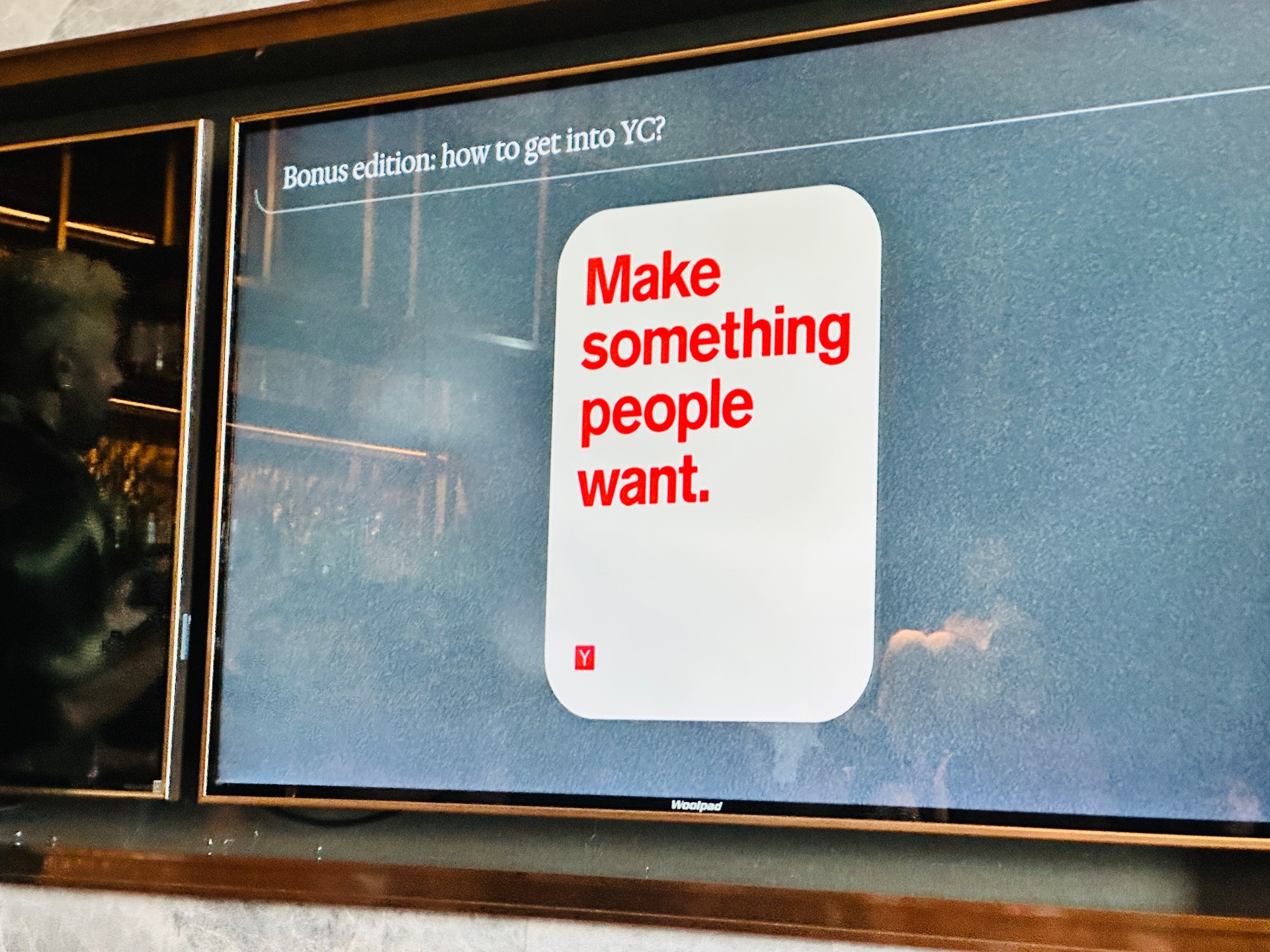
This was easily the most engaged session I've seen in months at Network School. Lalit's combination of hard won experience, tactical specificity, and honest delivery made it genuinely valuable.
If you're raising funds and want help, Lalit mentioned he does $10K checks through his syndicate with just a thirty minute call. Worth reaching out.