Day 1 · Pitch for the second date
By Karthik Nagapuri · 2026-09-14 · Draper Founder Program #2
Founder first, idea second: the opening day on naming your fears, thinking exponentially without a map, the five ingredients of a pitch, a mentor feedback checklist, and building your pitch backwards so the first meeting earns a second one.
The first day of a residential programme has a particular smell: fresh coffee, nervous laptops, and a room full of people who have each decided, privately, that the next twelve days matter. My co-founder Piyush and I walked into the Draper University India building in Hyderabad on Monday morning with a deck we thought was ready. By dinner, that assumption had been politely taken apart, along with most of the other founders' decks. This chapter is not really about our deck, though. It is about the lessons that apply to anyone who is about to stand in front of an investor, a customer or a hiring candidate and explain why their company should exist. If you are a student with an idea, a first-time founder, or an operator quietly wondering whether to jump, this is the day I wish I had read about a year ago.
The day's programme
The organisers billed the twelve days as an "expedition", and the first day's sessions, as announced, were:
- 10:00–10:30 AM: Icebreaker, and welcome to the expedition and the Draper ecosystem
- 10:30–11:30 AM: Welcome session with SK and Sai Chaitanya of Draper University India
- 11:45 AM–12:45 PM: Startup-themed challenges
- 2:00–3:30 PM: Founder Mindset: Climbing Without a Map, delivered remotely by Chris (Long Odds India / Draper AI)
- 3:30–5:00 PM: Round 1: peer pitching session on PSMBT, with Kashyap Kamallam
- 5:00–6:30 PM: Basecamp: the 60-second pitch
Real days drift from their agendas, and this one did too, but that is the shape of it: who you are, how to think, then how to say it.
Founder first, idea second
The welcome session with SK and Sai Chaitanya, who started the Hyderabad centre, opened with a history lesson that turned out to be a thesis. The Draper family has been investing for four generations, roughly 120 years. The team asked us to imagine the world that long ago, when there was no word for "startup". Innovation lived in university labs. Ideas needed capital to scale. Business people who backed those early ideas became the first venture capitalists, and Tim Draper's grandfather was one of them. The point was not nostalgia. It was that the family has been habituated, for over a century, to one kind of bet: back the founder before anyone else will.
That is why Tim is described as a contrarian. The story told in the room was that he gets interested precisely in companies other investors have passed on. If you are early and unfashionable, your job is to find investors like that, not to convince everyone.
We got a quick tour of the ecosystem. Draper University in San Mateo, California runs education, acceleration, venture and residency programmes, with over 5,000 alumni from 105 countries. The Hyderabad centre began as Draper Startup House in November 2023, described as a "backpacker's hostel for entrepreneurs", and is the only Draper University centre outside California for now.
Outcomes over energy
My favourite part was the honest admission about what did not work: hundreds of events, lovely energy, no outcomes. So they changed the shape: first structured programmes, then an accelerator, now a funnel where founders are observed over a year. One of the hosts put it bluntly: without outcome, there's no purpose of doing anything.
Steal that sentence for your calendar. Events and "networking" produce energy; very few produce outcomes. If you cannot name what changed in your company because you attended something, it was entertainment.
The ground rules
Then came the rules of the next twelve days, and they were not what I expected from an accelerator.
- Founder first, idea second. Mindset is the primary signal. A great idea with the wrong founder mindset will not get backed.
- Peers over mentors. The biggest finding from the first cohort was that founders learnt more from each other than from mentors, because the stage and the generation matched.
- Blunt feedback is the product. Mentors will tell you to your face when something will not work.
- Be patient, and be open. Expect to unlearn as much as you learn.
- Evenings are yours. Sessions run in the day; the rest is for company work.
It's the founder first and idea next.
- Draper University India team
A returning founder from the first cohort explained why he had come back. His phrase was the 1-degree change: when a plane takes off, a one-degree correction lands it in a different country. Most of what a good programme, mentor or peer group gives you is not a new destination. It is a small correction early enough to matter. He also quoted Tim Cook's idea that innovation comes from saying no to many things, not yes.
Know why you are in the room
Every founder was asked why they were there. The answers were a map of the early-stage mind, and I suspect you will recognise yourself in at least one:
- Validation and credibility. Especially in India, conviction often needs a borrowed logo before it becomes someone else's conviction. That was roughly my answer too.
- A serious peer group. One founder described reading a book on network effects late and realising he had spent months on hit and try. The lesson he drew: find people who have already built the thing you are building.
- Packaging. A media founder said, with painful honesty, that his team was too humble: "Even if you talk facts, you feel like you're bragging."
That last one deserves a pause. It is not bragging to say who your customers are, what you have built, or why you are qualified. It is information the other person needs to decide. Withholding it is not modesty; it makes their job harder.
Piyush, who is a doctor, spoke about faith. Patients take a leap of faith that you will make them better, he said, and changing an old system also needs a leap. Starting a company is a leap you take before the evidence arrives; the evidence you gather afterwards earns you the right to keep leaping.
Train the impromptu muscle
Before lunch, the team broke the ice by making us fold paper planes, name them and throw them down the room. Shortest flight earned an impromptu speaking challenge. I have never seen founders so competitive about something so irrelevant.
The prompts were brilliant precisely because they were absurd:
- Rebrand chai as a luxury product. The answer that won the room: saffron chai in a Nizam setting, served at sunset on a boat on Durgam Cheruvu. "I would sell experience." Luxury, she argued, is mostly about where you position the thing.
- Why should I trust you with ₹10? One founder gave a proper investor answer. Another said, "Or you can just ask nicely." Both got laughs; only one got the ten rupees.
- Why should pens come in three types, gel, ball and ink? The best answer went philosophical: water is lovely in every form, but you cannot shower in ice cubes.


It is a silly game with a serious muscle underneath. Impromptu speaking is what happens in the last two minutes of every investor meeting, every sales call and every job interview, when the question you did not prepare for arrives. The chai answer is also a tiny positioning lesson: the product did not change, only the setting and the story did.
Lunch was assigned: every founder was paired one to one with another, no mixing. It forces depth over networking; copy it if you ever run an event.
Say your fears out loud
After lunch, the hosts asked each of us: as a founder, what is your biggest fear? It felt like therapy. I am keeping the answers anonymous, but you will see yourself in at least two lines.
- Being misguided by the wrong people. Not failing on your own, but being steered wrong by someone without experience in your area.
- Losing the pump. A young founder said his only moat right now is the luxury to stay focused and energised, and his fear is losing that before the right signals arrive.
- Competition. New products appear every week. How do you stay ahead when you feel slow?
- Being misunderstood by the market, especially when you build a trust layer and people assume it is just another way to make money.
- Being judged. A self-described people pleaser was the most honest person in the room.
- Money souring relationships. Someone had watched partnerships go bad once value arrived, and works hard to keep the company's interests separate from personal ones.
- Running out of AI credits by lunch. This got the biggest laugh of the day. A deep-tech founder had exhausted his Claude limits twice before noon.
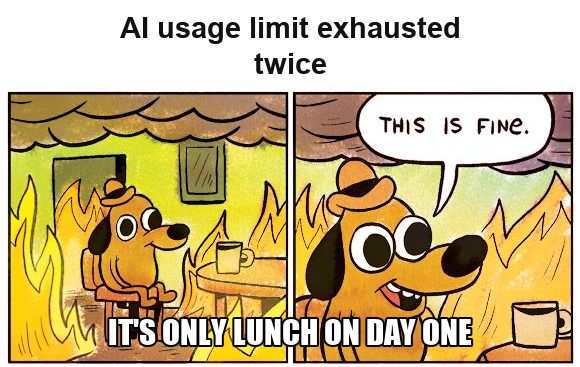
Why name fears? Because an unnamed fear quietly makes decisions for you. The founder afraid of being judged under-shares traction; the one afraid of competition builds features instead of talking to customers. Written down, a fear invites a better question: what would I do if it were not steering?
One of the hosts responded with a Telugu saying I had not heard before, roughly: if you spit on my face, I will wipe it off ninety-nine times; the hundredth time, you are gone. His point was that in business you stay grounded through almost everything customers, investors and banks throw at you, but you keep one line of self-respect that nobody crosses. Decide where your line is before someone tests it.
Protect yourself early
The fears round drifted into a free-form discussion that produced some of the most practical, unglamorous advice of the day.
Patents are nice, execution is the moat
Several founders asked whether to file patents. The consensus: file if you can, but never rely on them. Patents fade as alternatives arrive. Prove yourself in action.
Ideas can be multiple. But execution, only you can do it like you. That's the only patent you can have.
- A host at Draper University India
Write it down before it is worth anything
One host told a story, without naming anyone, of a previous startup where nothing was written down between the people involved, and what happened later when value appeared. The lesson: get agreements done upfront, while the company is worth nothing and everyone is still friends. It is the cheapest and least awkward moment it will ever be.
Qualify investors and mentors
"Angel investor" has become a fashion, the hosts said; anyone can call themselves one. Their advice:
- Ask a simple question early: what is your most recent investment? Watch the answer.
- A meeting should end in a yes or a no, not a maybe that eats two weeks.
- A mentor should have actually done something, as a founder or in a fund, before calling themselves a mentor.
- Strategic people, who bring more than money, usually beat a larger cheque from someone who brings nothing.
How to use a mentor's time
The hosts asked us not to mob visiting mentors, and to prepare instead: a short note with two lines on what we build, where we are, and exactly what we need from that person. Vague asks get vague feedback ("maybe figure out your GTM"); specific asks get specific help. Before any coffee with someone senior, write the one question only they can answer.
Founder Mindset: Climbing Without a Map
The afternoon's mindset session was delivered remotely by Chris of Long Odds India and Draper AI, and it was not recorded, so I cannot give you his stories or the questions from the room. What I do have are his three slides, dense enough to carry a session on their own. Below is what each slide says, then what I make of it, marked as my own reflection.
The title is itself a lesson. Nobody hands a founder a map; the job is to become a climber who can navigate without one.
Exponential technology needs exponential thinking
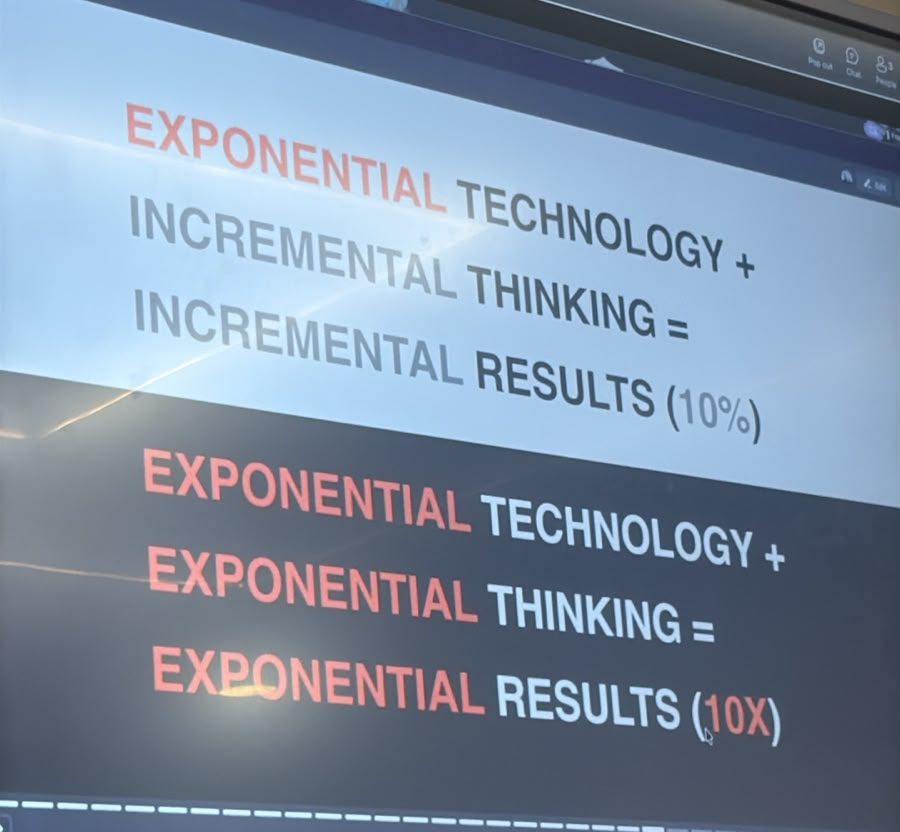
The slide's claim is simple: technology no longer separates founders. Almost every founder can use the same models, cloud and open-source libraries. What differs is the thinking you point them at. Exponential technology with incremental thinking gets you a 10% improvement. The same technology with exponential thinking gets you 10x.
Reflection. Incremental thinking is using AI to do the old job slightly faster: a quicker report, a smarter form, a chatbot on the same website. Exponential thinking asks which job no longer needs to exist. A hypothetical accounting firm that uses AI to draft emails has saved an hour a week. One that asks "what if the books closed themselves every day?" has a different company.
From funnel to flywheel
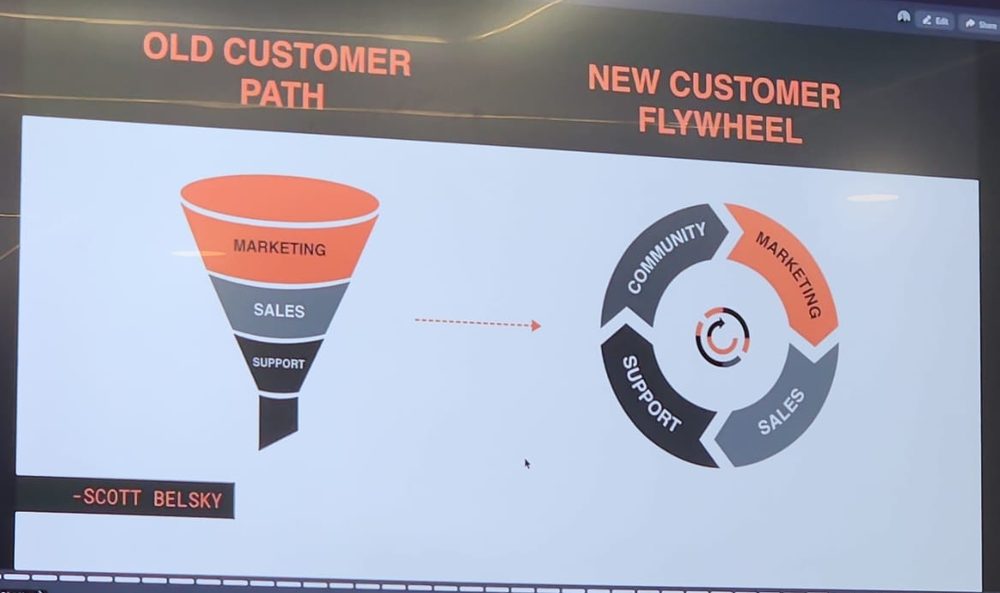
The second slide, credited to Scott Belsky, puts two pictures side by side. The old customer path is a funnel: marketing pours people in at the top, sales squeezes them through the middle, support deals with them at the bottom, and the journey ends there. The new customer flywheel is a loop, with community added as the fourth stage: community feeds marketing, marketing feeds sales, sales feeds support, and a well-supported customer flows back into the community, which starts the next turn.
Reflection. In a funnel, support is a cost centre at the end of the pipe. In a flywheel, support is the moment a customer decides whether to talk about you. Your first twenty customers are not just revenue; they are the community that will do your marketing if you look after them. It also connects to a test we would hear about the next morning: a customer who refers a friend is a much stronger signal than one who merely signs up.
Ten cheat codes
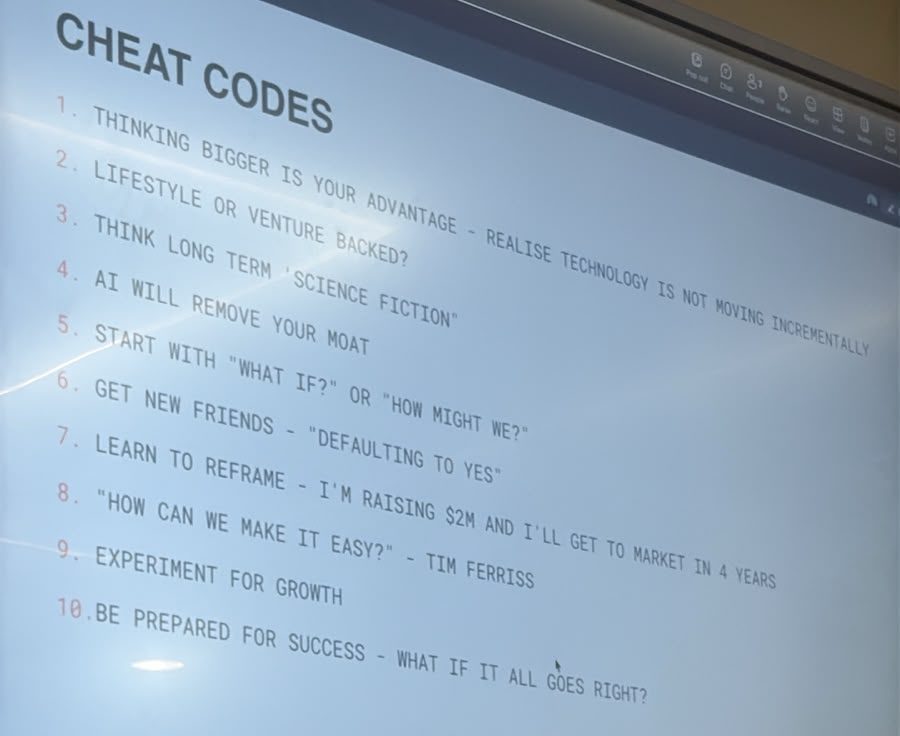
The third slide was a list of ten "cheat codes". Each is a line on the slide; the notes after each are mine.
- Thinking bigger is your advantage; realise technology is not moving incrementally. A plan that assumes next year's tools look like this year's is already stale.
- Lifestyle or venture backed? Decide which company you are building. Both are honourable; they need different money, different timelines and different pitches. (This came back the next day, from a very different speaker.)
- Think long term: "science fiction". Write the ten-year version of your company as if it were science fiction, then work backwards to what has to be true in year one.
- AI will remove your moat. Whatever took you a year to build, someone with good models may approximate in weeks. The moat has to live somewhere else: distribution, data, trust, speed of learning. (The pitch clinic made the same point.)
- Start with "What if?" or "How might we?" Questions open options; statements close them.
- Get new friends, "defaulting to yes". Your ambition drifts towards the average of the people around you. Say yes to rooms you would normally skip, at least for a season.
- Learn to reframe. The slide's example is a very typical founder sentence: how much we are raising, and that we will get to market in four years. My reading: take your own version of that sentence and reframe it. What would have to be true to get something to market in four months?
- "How can we make it easy?" The slide credits this question to Tim Ferriss.
- Experiment for growth. Small, cheap, frequent experiments beat one big bet you cannot learn from.
- Be prepared for success: what if it all goes right?
How can we make it easy?
- Tim Ferriss, quoted on Chris's slide
Number 8 is the one I have used most since. Founders tend to make the solution as hard as the problem. Asking "how can we make it easy?" of your onboarding, your pricing page or your sales process is often the cheapest growth experiment you will ever run.
Reflection: rehearse success, not just failure
The tenth cheat code landed differently for me because of where it sat in the day. That same afternoon we had all said our fears out loud. Founders rehearse failure constantly. Very few rehearse the opposite: what if it all goes right? If ten times the customers arrived next month, what would break first? Hiring, supply, support, your own sleep? Writing that list is not arrogance; it decides whether you catch the wave or drown in it.
There is also a useful tension between this session and the one that followed. The mindset slides say think 10x. The pitch clinic later that afternoon said prove your next 10x from your own numbers. I do not think they contradict each other. As one of the day's speakers put it, clarity is the next six months and vision is Mars. The climber needs both: a summit worth climbing towards, and a very clear view of the next handhold.
A deck's only job is the next meeting
Before the pitch clinic, one of the Draper India team walked us through the anatomy of a deck. It was the gentler version of what was coming.
A deck is not a Bible. You are not trying to tell an investor everything you know; you are trying to make them want to know more. It should be concise, visual, and self-explanatory without you in the room, because most of the time you will not be there when it is read. Investors see a huge volume of decks; if the first few slides do not hook, they skip.
The usual elements were there, but the emphasis was on rhythm: each slide must connect to the next, like a story, and the order is yours. Lead with your strongest point, whatever it is.
A few ideas stood out:
- Double down on your unfair advantage. A founder who has lived the customer's life "knows the other side of the persona". A retired army general on your board if you build defence.
- Answer the copy question. If it is a physical product, why can't someone reverse-engineer it and ship a copy in three months?
- Being first is expensive. Someone had to teach the world to use a touchscreen. Playing second lets you use a market someone else educated.
- Clarity and vision are different. Clarity is the next six months. Vision is Mars. "If you don't know how to build a wheel today, you can't say you're going to build a car in six months."
- Metrics need a reference. "200% growth" means nothing if it went from ₹1 to ₹3.
The closing tip was the kindest. Keep your own voice and accent. If you have ten points and forget two, only you know you forgot them. The listener thinks the eight they heard were the whole story.
PSMBT: build the pitch backwards
Then Kashyap Kamallam took the room, and the tone changed. He had us all act as investors, gave each founder three minutes to pitch and two for questions, and said, "Perform as badly as possible. I don't want you to perform great." It was the most liberating instruction of the day, and then he took every pitch apart with a kind of affectionate precision.
His framework is five letters: Problem, Solution, Market, Business, Team. Most founders spend most of their slides on P and S. His argument was that the re-engineering starts from B and T. An investor's real questions in the first two minutes are: who are you, why are you doing this, and how will you make money? If those do not land early, their mind has already wandered.
PSMBT, he stressed, is not a slide order. It is a conviction checklist. At the end of five minutes, did the listener get all five? That is the only test. You can tell the whole thing in one slide if the story is right. "Don't hide behind multiple slides."
The five ingredients, and what each missing one sounds like
The session's own slide turned PSMBT into a recipe, and I found it more useful than any pitch template I have downloaded.
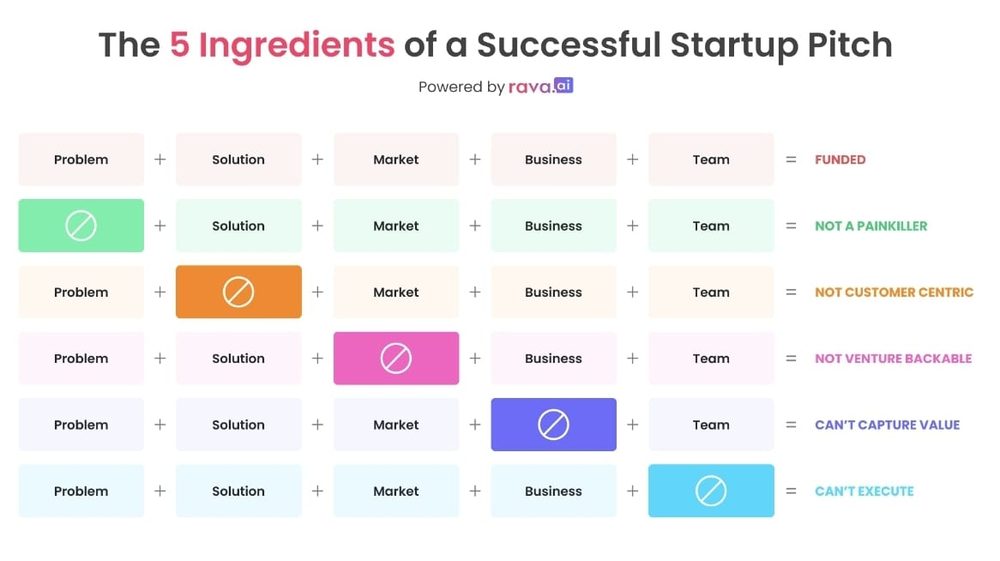
Problem + Solution + Market + Business + Team = Funded. The clever part is the second half, which tells you what an investor concludes when an ingredient is missing:
- No Problem: you are not a painkiller.
- No Solution: you are not customer centric.
- No Market: you are not venture backable.
- No Business: you can't capture value.
- No Team: you can't execute.
Use it as a decoder for vague feedback. When someone says your pitch "didn't quite land", ask which of those five sentences they were thinking. "Interesting tech, but who pays?" is a missing B. "Nice idea, but why these people?" is a missing T. Vague rejections almost always map to one missing ingredient, and once you know which, you know what to fix.
He opened with his own confession: he had killed his own product several times in a few years, because a better tool always came along. So he stays loyal to the problem and the solution, never the product. That is a useful stance for anyone building in a fast-moving market, especially in AI, where the tool you built on in January may be obsolete by June.
The first date
This was the metaphor he returned to all afternoon. The goal of the first pitch is the second date, not full diligence. Nobody signs anything in the first meeting. You are trying to earn the next one. That changes what belongs in the first five minutes:
- Tokens per minute. Every word out of your mouth should carry value. "The moment it's filler, I know you're not confident." Numbers fix filler: throw a number and people re-engage.
- Throw hooks like granola. Keep dropping small pieces in the first two minutes so the listener's mind stops wandering: traction, a credential, a demo, a killer number.
- Front-load the credentials. One founder mentioned an important advantage in the last five seconds. "Until you told me that, I didn't know who you are." Logos, universities, partnerships: first half, not last slide.
- The 30-second test. Whatever you blurt out when the timer says 30 seconds is your most important sentence. Move it to the start.
- Poker faces. "If you're laughing at your own conversion slide, you know why you're laughing." Weak numbers are fine at this stage. Show the method that takes them from bad to good to great.
If that is the important sentence, shouldn't that be the first?
- Kashyap Kamallam
Under time pressure, the brain finds the sharpest version of the story because it has no room for throat-clearing. The trick is to find that sentence at your desk. When we ran our own pitch in the clinic, we made exactly this mistake: our strongest proof came in the last half minute, after several slides of problem. Kashyap's note was simple: shock them early, then tell the story. It is the most common fix I saw all afternoon, across every sector in the room.
Slides that behave
- Every slide is a talk, and the order of slides is the stitching of your thought process. A concept people will not get deserves a slide of its own.
- One hero point per slide. Too much text is indigestion. Use an AI model to clean up copy, then make the nugget it articulated best the hero.
- Show the logos. "You can't say 'top label'. If it's a known name, put the logo."
- A few core slides, many in the appendix. Any question, "slide 14", and you are in control of the room.

Market sizing you can recite
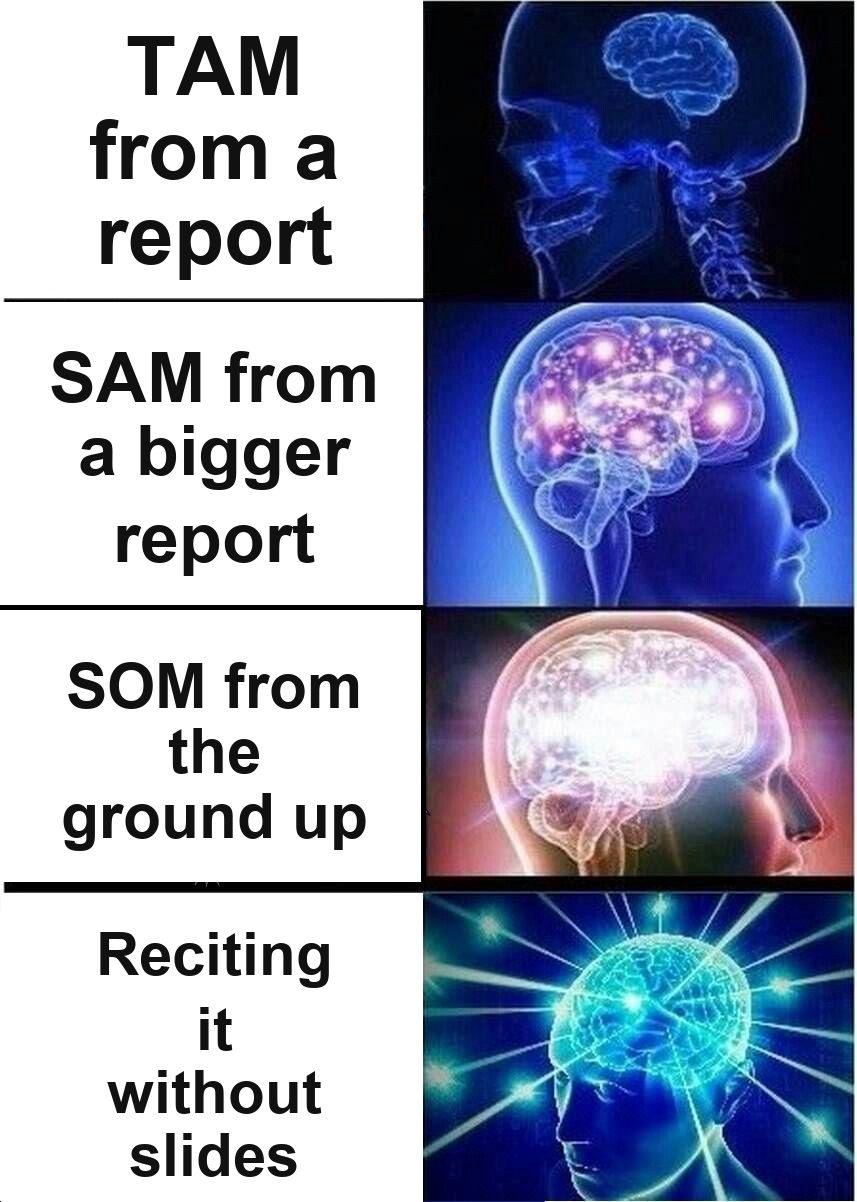
Kashyap was merciless about TAM slides. A giant number tells him you read a report, not that you know your customer. What excites an investor is a bottom-up serviceable market for the next 16–18 months that you can recite without slides. His teaching example: count the working mothers in one Hyderabad neighbourhood, take the share you can realistically serve, multiply by a monthly price and by twelve. "If you don't have that level of formula in your head, you can't convince other people."
He added that go-to-market is not digital marketing. It is the specific handful of things you will do to reach your niche, and the niche decides the strategy. If your customers are in your own city, proximity is an advantage: physical meetings close faster and you are not burning cash on flights.
Left hand, right hand
Business means profit and loss at the unit level. What does one unit cost you, what do you make on it, and if you lose money now, how many more units until you flip?
Then the point I think every founder in the room needed. Suppose your own business slide says every 70 you spend brings back 100 in revenue. Then your ask slide requests seven times that spend. By your own model, you should be promising seven times the revenue. If you are not, "your left hand is not talking to your right hand." The ask must fall out of the unit economics, not be picked to sound ambitious.
On pipeline: a small next-quarter revenue number is not embarrassing. What excites an investor is the path from that number to ten times that number, and what you need to get there. Once you have done one 10x, you can credibly promise another.
Value creation before value capture
This was the single most useful idea of the day, and Kashyap said almost every deck misses it. Before your pricing slide, you need a slide that shows the value you create, in the customer's own variables: time, headcount, errors, money.
For ₹3,000 of value capture, you have to create ₹30,000 of value.
- Kashyap Kamallam
His worked example was a hypothetical host managing many rental properties who needs several staff just to juggle bookings across platforms. Put the monthly staff cost on one side and your subscription on the other, and "the value creation story writes itself." "Don't push the product. From the customer's point of view, why will they pull it?"
Related: talk in outcomes, not outputs. Not "unlimited generation" or "170 models orchestrated", but the lead generated, the case researched, the film made at a fraction of the cost. And for every AI startup, have a slide ready for the question every investor asks first: why can't Claude or GPT do this? Your real competition is a premium chat subscription that already does a lot.
Finally, land and expand. Your entry price is only a door. Show the path from a small monthly subscription to a much larger lifetime value per client. "That is the next story you all need to tell."
Jockey, horse, race
"Jockey is more important than the horse" in the initial phase. Founder-problem fit must be explicit: why are you the right person for this? If you have lived the problem (a doctor building for doctors, a former logistics manager building for warehouses), it is obvious, so say it loudly and early. If it is not obvious, your research is your credential: the hours spent, the people interviewed, a simple bar chart of the top problems they told you. And "visionary leader" is not a credential.
He also named the difference between a solution and a product. The product is only the vehicle to the solution. Today, with your budget, you may have built a rickety cart that still moves. "You give me the money, I'll build a car." Investors do not expect a great product at this stage. They expect an MVP that works.
Lessons from the clinic
I will not describe other founders' companies, but the notes Kashyap gave each of them generalise beautifully. If you see your own pitch in any of these, fix it this week.
- One comparison can be the whole problem. A founder opened with a brutal cost asymmetry between a cheap threat and an expensive defence. That one line was the problem slide. Don't spend four slides on it.
- Technical depth is a minority of the story. "I felt I was sitting in your technical review meeting." Tech is maybe thirty percent; the rest is who does the business, how, and how big.
- Don't hide your best evidence. Beautiful slides with real partners, but the numbers and names were missing. Numbers first, logos visible, features turned into what the customer saves.
- For consumer products, frequency is the game. How often does a user come back? Lifetime value should sit well above acquisition cost.
- Introduce the cast. Don't assume people know your acronyms, and personify the problem. "You didn't introduce the cast of your movie."
He closed with the metaphor I keep thinking about.
We may start as boat people, but we have to be a yacht.
- Kashyap Kamallam
Start by selling the simple thing to the customers you can reach, but know where the bigger business is and show you have a route to it.
A pitch feedback checklist
The day's last session was Basecamp: every founder pitched in sixty seconds. Afterwards, mentor Kiran Babu shared written feedback with the whole cohort. I have stripped out who each note was for, because most applied to more than one of us. Grouped, they make a checklist you can run against any deck.
The story
- Is the problem statement stronger and clearer than feels necessary?
- Do you say who you are up front, not on the last slide?
- Does the deck connect to PSMBT, so a listener could tick all five ingredients?
- Have you assumed the audience knows your terminology? Assume they do not.
- If the product is technical, have you simplified it for a general audience?
The evidence
- Is traction highlighted, and does the deck show the ambition from where you are to the next milestone?
- Can you show a pipeline of proofs of concept, not just one?
- Have you added awards and credibility markers?
- Are you talking in outcomes, not outputs?
- For each feature, do you explain what it does for the customer, not just that it exists?
The business
- Is the business model clear: how exactly do you make money?
- Is there a money slide?
- Do you highlight 10x value, and separate value creation from value capture?
- For consumer products: is the use case told visually, and is the recurring revenue logic explicit?
- Are you over-investing in competitor benchmarking? One clear slide is usually enough.
- Is the ask stated? Always state the ask.
The team and the design
- Do you introduce the team, and answer "why you"?
- Show, don't tell: is there too much text?
- Is there a clear visual hierarchy, with enough contrast to read from the back of a room?
The pitch is about the jockey and the scoreboard, not just the horse.
- Kiran Babu, written feedback to the cohort
In his framing the jockey is the founder and team, the scoreboard is the money and the business, and the horse is the product. Most of us had spent our sixty seconds on the horse, yet almost none of the notes were about the product. They were about whether the listener could understand the problem, trust the people and follow the money.
Sell to three people at once
After dinner we had an exploratory call with an early-stage investor. It was private, so the people and details stay out, but one lesson from it belongs in any founder's handbook, especially in B2B.
In many sales, the person who decides, the person who uses and the person who benefits are different people. In our world, a hospital owner decides, a doctor uses, a patient benefits. If the decider does not like the outcome, he will not buy. If the user does not like the product, he will not use it. And however much you solve for the beneficiary, nothing reaches them unless the user adopts it.
In ed-tech, a principal decides, a teacher uses, a student benefits. A useful habit: for each of the three, write the single sentence that makes them say yes, in their own language. The decider usually speaks money or risk. The user speaks time and friction. The beneficiary speaks outcomes.
Adoption is not retention
The investor floated a model: give the hardware away and charge purely on usage. Piyush answered from an earlier product he had worked on, a smart pen for doctors. Adoption was easy because it required no change of habit. The hard part came later, when people were asked to pay. Adoption is not retention, and a pricing model has to be designed for month six, not day one.
"Why can't a consultant just build this?"
Couldn't a customer hire a consultant to wire a generic model to a few tools? A good answer, in any sector: customers do not want to maintain software, stitched-together tools rarely integrate deeply, and domain data teaches you what a generic model misses. Have yours ready.
Lead with the smallest workflow that pays
The biggest takeaway from the evening: open with the smallest workflow that makes the decider money, and switch off everything else until you are inside the door. Once inside, earn the right to solve the next small problem. The vision is the second chapter.
Apply it to your startup
Here is how I would use this day if I were starting from zero, in any sector:
- Write your pitch backwards. Start with two sentences: who you are and why you, then how you make money. Only then write the problem and solution. Read it aloud and check that team and business land inside the first minute.
- Find your 30-second sentence. Pitch to a timer and notice what you say under pressure. That is your opening line.
- Build one value slide. In the customer's variables, show at least ten times what you plan to charge. If you cannot, either your price is wrong or your understanding of their pain is.
- Reconcile your ask. Put the unit economics next to the ask. If they disagree, fix one.
- Map decider, user, beneficiary. If one is blank, that is your biggest go-to-market risk.
- Run the checklist. Before your next pitch, go through the feedback checklist above line by line, and ask someone outside your sector to do the same.
Resources from the day
People who taught
- SK and Sai Chaitanya, Draper University India: welcome session, with the Draper University India team on the anatomy of a deck.
- Chris, Long Odds India / Draper AI: Founder Mindset: Climbing Without a Map (remote, not recorded).
- Kashyap Kamallam: peer pitching session on PSMBT.
- Kiran Babu: written feedback on the Basecamp 60-second pitches.
Frameworks
- PSMBT (Problem, Solution, Market, Business, Team) and the five-ingredients slide.
- Exponential technology + exponential thinking = exponential results.
- The customer flywheel (community, marketing, sales, support), credited to Scott Belsky.
- The ten founder cheat codes.
- The first pitch earns the second date; the 30-second test.
- Value creation before value capture (create ten times what you charge).
- Jockey, horse, race and scoreboard.
- Decider, user, beneficiary.
- The 1-degree change.
Ideas quoted
- Tim Ferriss: "How can we make it easy?"
- Tim Cook: innovation comes from saying no to many things.
Tools mentioned
- General AI models (Claude, GPT) for cleaning up slide copy, and as the competitor every AI startup must answer.
- The five-ingredients graphic was made with rava.ai.
What to take away
- Investors at the earliest stage are betting on the founder; make founder-problem fit explicit and early.
- The first pitch has one job: earn the second meeting.
- Build the story backwards from team and business; PSMBT is a checklist, not a slide order.
- Your most important sentence is the one you say under time pressure. Move it to the front.
- Value creation comes before value capture: show ten times what you charge, in the customer's variables.
- Your ask must fall out of your own unit economics.
- Know your serviceable market as a formula you can say without slides.
- Decider, user and beneficiary are often different people; the sale needs all three.
- Adoption is not retention; price for month six.
- Be loyal to the problem, not the product. Peers are part of the curriculum.
- Exponential technology rewards exponential thinking; ask which job disappears, not which gets 10% faster.
- Build a flywheel, not a funnel: your supported customers are your next marketing.
- Rehearse success as seriously as failure: what breaks if it all goes right?
- Vague feedback usually means one missing ingredient. Find which one.
Try this
- The 30-second test. Set a timer for three minutes and pitch to a friend. At 2:30, have them say "30 seconds". Write down whatever you blurt out. Make that your first sentence and pitch again.
- PSMBT scorecard. Have three people watch your pitch and score Problem, Solution, Market, Business and Team from 1 to 5. Fix the lowest letter first, and try moving Team and Business earlier.
- Write your market as one line. Customers you can reach in the next 18 months × price per month × months = revenue. If you cannot fill it in without research, that is your homework.
- Build the pre-pricing slide. List the customer's variables (hours, headcount, errors, rupees lost). Quantify what your product changes. Check that value created is at least ten times your price.
- Left hand, right hand. Put your unit economics next to your ask. Does the ask imply a revenue number you actually believe? If not, change one of them.
- Name your fear, then your best case. Write down your biggest founder fear and one decision it has quietly made for you this month. Then answer cheat code 10: if it all goes right and ten times the customers arrive next month, what breaks first? Fix the cheapest item on that list.