Day 3 · How to make people believe
By Karthik Nagapuri · 2026-09-16 · Draper Founder Program #2
How to make people believe in something that barely exists yet: Sharath Chandra's full founder storytelling playbook (IMPACT, three audiences, a five-part content engine, 70-20-10), Mohnish Yerra's investor lens, one-slide decks, warm introductions and peer feedback after midnight.
Wednesday started with a warning about punctuality and ended with a dawn cycle ride invitation at an hour that no longer counted as night. In between came a morning of pitching other people's startups, a storytelling session that changed how I think about founder content, two investors with very different philosophies, a brutal and useful deck review, an angel investor who stopped a pitch in the first minute, a mentor session in the evening, and a peer pitch circle that someone christened the Morning Club because anyone still awake by then was, technically, an early riser.
If Day 2 was about proving the problem, Day 3 was about something harder: getting other people to believe you when you are not in the room. That is a skill every founder needs long before they need a product, and very few of us are taught it. These notes are organised around the lessons, so you can use them whatever you are building.
The day's programme
The theme on the agenda was "finding your voice: message and positioning", with the line that how you tell your story is as important as the story itself.
- 10:00–11:00 AM · A surprise session, then founders pitching each other's startups
- 11:00 AM–12:00 PM · Workshop: From Idea to Impact, How Founders Tell Their Story, with Sharath Chandra (Co-founder and CEO, 3DM)
- 12:30–1:30 PM · Investor meet with Mohnish Yerra, followed by a talk from Sameer of the SuperMorpheus community and short one-to-one mentor slots
- 2:30–4:00 PM · Community workshop and activity
- 5:30–8:00 PM · Evening investor meet with Kashyap
- Late night · An unofficial peer pitch circle that named itself the Morning Club
Your pitch is whatever survives a retelling
The organisers opened by reminding us, cheerfully and firmly, that everyone had been in the room by the start time and the next person to walk in late would be handed a penalty notice. Then came the exercise. We were paired up, and each founder had to pitch the other person's company. Not your own. Theirs.
It sounds like an icebreaker. It is actually a mirror. After two days of hallway conversations, whatever your neighbour can say about your startup is the version of your pitch that actually landed. Everything else you said was noise.
The pitches ranged across the whole cohort: software for homestay hosts, a proximity app for people nearby to share a cab or split an offer, a tool that indexes and repurposes video catalogues, a cross-border talent marketplace, security for the age of AI agents, neurotech wearables, a student-run AI lab, a sales-enablement tool, and a couple of autonomous defence teams.
What survives, and what breaks
When my neighbour pitched our company back to the room, he opened with a human moment, not our hardware: a professional explains everything carefully, and an hour later the other person calls back asking what they were told. Then the solution. Then the privacy safeguard. Then the team and why we were the right people. Nobody remembered our architecture. Nobody remembered a spec. What survived two days of retelling was story: problem, human, solution, trust, founder, in that order.
The funnier half of the morning was watching pitches mutate. One founder was credited with ideas the world's richest industrialists had supposedly copied, and a letter of intent was upgraded into a massive order until the actual founder shouted "potential, potential, potential" from the back.
The lesson in the joke is how information decays:
- Numbers are the first thing to get garbled. Keep your proof points few and simple, so they cannot be misremembered into something you never claimed.
- The problem is the last thing to go. Make it so vivid it survives any retelling.
- Your peer is a proxy for an investor's partner meeting. If a fellow founder cannot retell your pitch, the investor who liked you cannot retell it to their partners either.
The organiser named the deeper purpose as we wrapped: understand what others are building so you can bring value to their startup. A founder from a completely different sector, pitching us, had already spotted a use case in their own industry that we had never considered. That is the kind of idea you only get when someone else is holding your story.
The founder's new job: make people believe
Our guest speaker was Sharath Chandra, co-founder and CEO of 3DM, an eleven-year-old digital agency in Hyderabad and Bangalore that works across manufacturing, healthcare, real estate, B2B, education and e-commerce. He arrived late because of traffic and immediately asked whether anyone in the room was solving Hyderabad's traffic. Nobody was. Opportunity noted.
His deck was titled "From Idea to Impact: How Founders Tell Their Story (and Make People Care)", and its first slide carried the whole session in two lines: Ideas create possibilities. Stories create believers. What follows walks through every part of that deck, in his order, with the stories and questions from the room folded in.
The best technology does not always win
His second slide was a provocation for a room full of engineers: the best technology does not always win. The world is full of great products. The winners are usually the ones who can make people care, and every founder has to answer one blunt question for every audience they meet: why should the world care?
Building has become easier. The founder has to wear a new hat, and the founder's job is to make people believe.
- Sharath Chandra
On the slide it read even more simply: a founder's job is not only to build, it is to make people believe.
Why founders are suddenly on camera
He walked us through a timeline. There was a time when nobody needed to know a founder's face. Legacy brands earned credibility over decades of presence, visibility and large branding budgets. Today, with AI and the internet closing every gap (delivery went from days to fifteen minutes), products look more and more alike. The shortcut to that credibility layer is now the founder.
He pointed to consumer brands like The Whole Truth, where the founder sat down on camera and was transparent, even vulnerable, about ingredients, machinery and packaging. Nothing new was invented. The approach was new, and customers rewarded it.
What marketing teaches you about human attention
Then a funnel I have been thinking about all week. At 3DM they work with brands across real estate, tech and consumer businesses, and the pattern is always the same:
Impressions are visibility. Action is the business. Every step of that funnel leaks, and what plugs the leak at each step is not a better spec sheet but a better reason to stop, a better reason to trust, and a better reason to act.
The founder communication gap: jargon is a wall
He called out the room, gently. One founder had said "SDR" and "ICP" in her intro. "I don't know what SDR is," he said. "I will have to go back and Google it." He was interested, but the jargon put a wall between interest and understanding.
He confessed to the same sin. At networking events he does not want to say "I run a digital marketing company", because it feels like underselling. He wants to say performance marketing, AI-driven, almost deep tech, and he ends up speaking in jargon. It took him years to tone it down.
His slide called this the founder communication gap. Founders naturally speak product language: technology, features, architecture, capabilities, roadmap. But the audience thinks differently. They ask:
- What problem does this solve?
- Why now?
- Why you?
- What changes because of this?
- Can I trust you?
Product language is not wrong. It simply answers a question nobody in the audience has asked yet. A useful habit: before any pitch, write the five questions on the right at the top of your notes and check that your first two minutes answer all of them.
Same product, different story
He rewrote a cybersecurity pitch live, and the slide put the two versions side by side. The feature story (what you built): "We built an AI-powered cybersecurity platform that detects threats using machine learning." The impact story (why it matters): "As businesses become more digital, cyber threats are evolving faster than traditional security systems. We help companies identify threats before they become business disasters." Same product, different meaning. The second answers the only question a customer really has: what's in it for me.
A quick way to convert your own line: take your feature sentence, ask "so what?" twice, and write down the second answer. A hypothetical logistics SaaS founder might go from "route optimisation with real-time GPS" to "fewer late deliveries" to "customers who stop threatening to switch". The last one is the story.
Why now: find your delta
"Great stories create urgency," the slide said. A strong founder story does not only explain what you are building. It answers why it needs to exist now, and why this moment is different. He broke it into three ingredients: a big problem, a change happening now, and a new possibility. That combination, in his words, is what turns a good idea into a great opportunity.
Most founders can name all three if you ask. Very few say all three together, in one breath, every time. Try it for your own company: the problem that has existed for years, the thing that changed recently (a technology, a regulation, a behaviour), and the new thing that is now possible because of that change.
The IMPACT framework
He has read his Kotler and his AIDA and his top-funnel, mid-funnel, bottom-funnel. He boiled it down into something any founder can use tomorrow.
The slide called it "a simple structure for every founder story", one letter per step, each with the question it answers:
- I, Identify the problem. What broken reality exists today?
- M, Make it human. Who suffers because of this?
- P, Present your insight. What did you understand differently? This is where most founders are thinnest.
- A, Articulate your solution. What did you build? Only now does the product appear.
- C, Create evidence. Why should people believe you? IP, backing, testimonials: in marketing, the reason to believe.
- T, Tell the future. What does the world look like because of you?
His example of a reason to believe was a skincare brand promising glow "because of hyaluronic acid plus something plus something." Someone asked: what if people don't understand hyaluronic acid? That is the point, he said. The benefit attracts you. The ingredient gives you something to go and search. When the search result justifies the promise, you are sold. Evidence does not need to be understood, it needs to be checkable.
One story, three audiences
"Your story has three jobs," the next slide said: the same story, adapted for different audiences. Each audience has one sentence it needs to say to itself after hearing you. Change the emphasis, never the truth.
- Investors need to think "this can become a large company." Show market opportunity, vision, scalability and the team. In the room he added the team's background and the entry barrier, with a test for it: if I heard your idea today, how long, how much capital and how much skill would it take me to copy it?
- Customers need to think "this solves my problem." Show pain, outcome, differentiation and trust.
- Talent needs to think "I want to build this future." Show mission, culture, growth and meaningful impact.
Most founders only ever write the investor version, and then wonder why their careers page and their sales emails sound like a pitch deck.
Your story does not end after the pitch
This was the hinge of the deck. A great story told once disappears. A great story repeated consistently becomes four things: category leadership, trust, brand recall, and opportunities that come to you rather than the other way round.
Founders are not just CEOs. They are also Chief Storytellers.
- Sharath Chandra, from his deck
He made the case for category leadership inside a fragmented market. Delivery is fragmented, yet nobody compares a fifteen-minute quick-commerce app to a courier company. Cybersecurity is huge, but you only need to own your gap, and you own it by showing up and talking about it consistently.
The founder content engine: five types of content
So what do you actually say, week after week? His answer was a content engine: five types of content every founder should create, each with its own question and its own job.
- The Problem: "What is broken?" It creates awareness.
- The Insight: "What did we discover?" It builds authority.
- The Journey: "What are we building?" It creates trust.
- The Proof: "Why should people believe us?" It reduces risk.
- The Vision: "Where is the world going?" It creates belief.
Notice that the engine mirrors IMPACT. The problem and insight posts are the I, M and P of your story; the journey is the A; proof is the C; vision is the T. Your content is simply your founder story, cut into pieces small enough to post, and told again and again. Most founders only ever post proof (announcements and milestones) and skip the four jobs that make proof believable.
Where to distribute: start narrow, build consistency
The next slide mapped channels to audiences and a starting frequency. His subtitle was the instruction: start narrow, build consistency.
- LinkedIn, for investors, enterprise customers, hiring and the startup ecosystem: 3–5 posts a week.
- X (Twitter), for AI and deep tech, developer communities and industry conversations: daily short insights.
- YouTube, Shorts and Reels, for complex ideas, founder personality and product demos: 1–2 videos a week.
- A newsletter, for building an owned audience: monthly.
The newsletter row is the one most founders skip, and it is the only channel on the list that you own. Platforms change their algorithms; an email list stays yours.
How to actually keep it up
This was the part I took the most notes on, because I have been living it with a 100-day video series.
- One platform first. Pick the one or two where your customers and investors actually are. Being everywhere is "a dream to be true", not a plan.
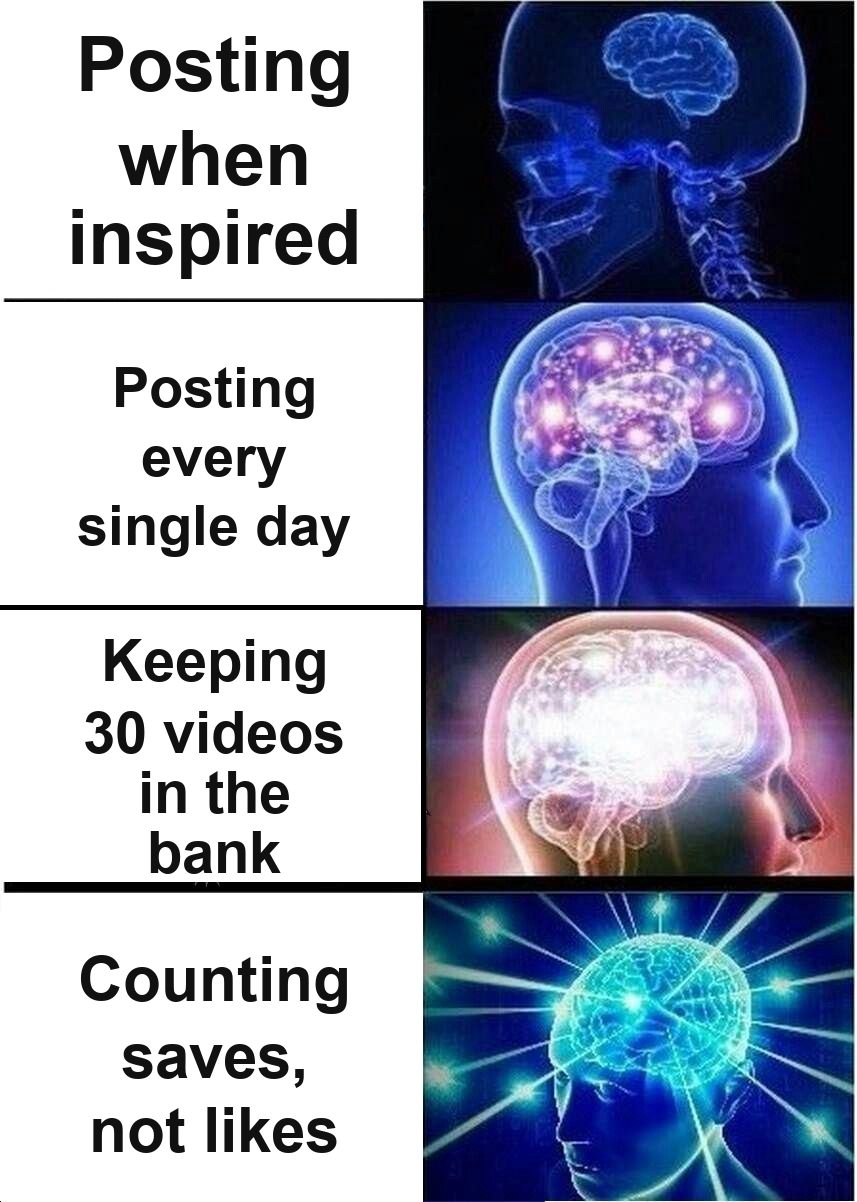
- Keep 30 pieces in the bank before you post the first. He called it your minimum account balance. Founders never know what is coming. The day a crisis lands, your mind cannot produce even a 30-second video. The buffer protects the frequency.
- Frequency serves quality, not the other way round. The frequencies on his slide are a starting rhythm, not a quota. In the room he was clear that the old rule of a post, a story, a reel and a static every day is gone. One genuinely impactful video can outshine two hundred mediocre ones.
- Measure saves and shares, not likes. A save means the content is useful to someone. A share means it is relevant to someone else. Likes hardly matter.
Specific is terrific.
- Sharath Chandra
A founder in industrial automation asked whether generic "top three tips for your business" content would work. No. Content for "IT heads" makes sense to nobody. Content for IT heads in the automotive industry can address one real problem, and that is the video someone saves, or forwards to a friend who fits the description.
The hook is the benefit
His hook rule: lead with the benefit, not the problem. Then context, a reason to believe, and a call to action. The best-performing real-estate post he had seen recently was not beautifully edited at all: just average rents across Hyderabad neighbourhoods, area by area, as text on a screen. Pure research and insight. People saved it because it would save them time later. "I am selfish about my time," he said, and so is everyone watching.
He shared an exercise his agency runs. Everyone opens their own saved videos and asks, for each one: why did I save this? A recipe for someday. A prompt hack to send to the team. An event reminder. A reference for a client's shoot. Every save has a reason. Your job is to give your customer that reason.
A simple weekly content calendar
To stay consistent without overthinking, his deck gave a five-day rhythm, one content type per weekday:
- Monday, industry insight: something changing in your space.
- Tuesday, building journey: what we learned this week.
- Wednesday, educational content: explain your category.
- Thursday, founder perspective: what do you believe about the future?
- Friday, proof: progress, a customer, a milestone.
When he talked through Tuesday he called it the failure journey: what we got wrong this week and how we corrected course. That framing is worth keeping. "What we learned" is easy to fake; "what we got wrong" is not, and it is the post people trust.
The 70-20-10 rule
The ratio that ties it together came with a warning in the slide title: don't turn your social media into advertisements.
- 70%, educate: teach your market and share insights.
- 20%, build trust: share your journey.
- 10%, promote: talk about your product.
People don't follow companies. They follow insights and people.
- Sharath Chandra, from his deck
He went further: in a founder story, skip the call to action altogether. If you are talking about a real problem that matters to me, I will find your bio and call you. The less salesy you are, the more credible.
Layering paid on top
When it is time for performance marketing, do not guess. Publish around ten pieces over six weeks, see which earns the most saves and shares, and turn that one into the ad. With influencers, run many voices and put paid spend behind only the few that perform. For lead-based Meta ads, set up the Conversion API so the platform learns which leads became real conversations; without it, it keeps finding you more of the wrong people. Content and community take time, so performance, influencers, SEO, answer-engine optimisation (being the answer when someone asks ChatGPT, Gemini, Claude or Perplexity) and founder branding run in parallel.
When the user and the buyer are different people
A founder building assistive technology asked the question many companies face: the person who uses the product is not the person who pays for it. His answer was clean. Target the more influential group first, the family member with buying power, and tell the stories of the problems the user faces. Buyers resonate with stories about the people they care about. The same logic applies to a SaaS tool used by analysts but bought by a CFO, or a kids' product used by children and bought by parents.
The open question: what happens when everyone tells stories?
He ended honestly. If every founder starts telling stories, the stories become noise. What then? He did not have an answer, only a hunch: communities. How you keep a community close, give it leverage and give members a reason to stay. In consumer brands that is already happening. In B2B, defence and health, he said, it has not, and there is still a vacuum for founders to fill.
His four key takeaways
The deck closed with four takeaways, which I have copied into the front of my notebook:
- Don't explain what you built. Explain why it matters.
- Your story is not a pitch deck. It is a daily asset.
- Distribution creates belief. Consistency builds category leadership.
- A great story attracts capital, customers, talent and opportunities.
And the last slide, three lines and a sign-off: build the future, tell the story, create the impact.
Ideas build. Stories scale.
- Sharath Chandra, closing slide
Reflection: auditing my own content
I audited my own 100-day video series through his lens. I was consistent, but kept no buffer, measured views rather than saves, and talked too much about what we built: the 10%, not the 70%. If you are starting a founder content habit, the better question is not "what should I post today?" but what would my customer save?
Think like an investor who wants to say no
After a group photo, the organisers introduced Mohnish Yerra, who runs a Hyderabad family office, MyCap Investments, and a community investor network, Leaders for India. Born and bred Hyderabadi, industrial engineering at Purdue, years in manufacturing, an MBA, then back to India to invest in startups. He thanked the Draper India team for doing, in his words, "God's work."
He was clear about where he sits: not pre-seed, not seed, but after product-market fit, as a bridge before the large venture rounds. "Think of us like the trailer before the actual movie starts." A founder needs the right guidance and someone who will back them no matter what, not just money. Founder and investor are on equal footing, so do not take just anyone's money.
My entire mindset will be that I'm never going to invest here. Establish why I should invest, what is the novelty of the product, in the first three minutes.
- Mohnish Yerra
That framing is useful whoever you are pitching. Assume the default answer is no, and design your first three minutes to overturn it. His lessons, in the order he gave them:
- Protect the cap table before your first big institutional round. Founders should go in holding a large, clear majority, and ESOPs, co-founder equity and family money all count against it. A fund doing diligence checks a very long list of variables, and a messy cap table is one they will not forgive.
- Be very careful with the 3F round (friends, family and fools). The relative who lends at a punishing interest rate can kill your startup right there.
- Decide if you are a startup at all. If you do not dream of Series A, B, C or an IPO, build a business: make money every month, reinvest it, and never worry about investors. Both are honourable. They are different games.
- Get the boring basics done. Nobody cares about your logo. Get registered, get your certificates, apply for grants, join the incubators. "The right time is yesterday."
- Stop saying AI, AI, AI. Much of what people build is probably already a feature in ChatGPT or Claude. Tell him the service and how AI removes work hours or cost. What excites him is context intelligence: companies sitting on piles of data that need to be analysed properly.
- Protect your IP in every country you sell in. Protect it only at home and someone copies you elsewhere and underprices you. Unless it is registered, he cannot value it. Also, if you are raising in India, pitch in rupees.
- Know your painkiller from your vitamin. A phone is a painkiller: nobody has to market it, people run to the store. A vitamin needs endless marketing and might still not work. And if your product only fits one local context, your market ends at that border.
The Iron Man suit: enter through a narrow door
The most memorable answer went to a defence founder who asked whether he should break his big vision into one narrow product to get funded. "That is exactly what you need to do. That is the game."
Your vision might be an Iron Man suit, he said, but nobody will buy an Iron Man suit from a stranger. Prove one product that meets the buyer's bar, earn trust with whoever gives you the first purchase order, and get inside the system first. Work ten hours a day on the suit if you like, and the other ten on cracking the door. Once you are in, the next orders get easier, and later, when the barriers rise for everyone else, you are already inside. Then pitch the big picture.
This applies far beyond defence. Any founder selling into a slow, trust-heavy buyer (government, hospitals, banks, large enterprises) faces the same choice between pitching the dream and shipping the wedge. The wedge wins.
Choose who you build with: the conscious startup
Straight after, Sameer from the SuperMorpheus community arrived. He opened with a correction: he is not really an investor. In 2008 he and a few friends started Morpheus, which he described as India's first startup accelerator. They noticed founders kept coming to them for help but never talked to each other, and the community side was born. Around 2014, as money flooded in and everyone chased faster raises and higher valuations, founders started looking for shortcuts. "We were not shortcut people." They shut it down while it was still successful.
Years later they came back, but only to work with what he calls conscious startups: ventures that want business success, but not at the cost of damaging anybody. The community grows only by reference. There is no address to apply on the website, because they are not looking for numbers. If you only want money, he said, they may not be the right people.
What stuck with me was how he described consciousness: "You just don't go with defaults in life." Food, travel, your body, your business. A founder from that community put it practically: do not just chase the first round of money. Find a problem worth solving, solve it authentically, and bring the right people along.
One slide, one message
Between sessions, Piyush and I sat with a mentor and went through our deck slide by slide. The specifics stay private, but the lessons are universal, and they stung in the right way.
- One slide, one message. Three points at most. Anything more and the reader does not know where to start.
- Too much information leads to indecision. Design for someone with five minutes and money, not for how hard you worked.
- Remove decoration, keep the numbers. Decorative diagrams take space. Numbers "speak everything."
- If the founder needs time to read the slide, it is broken. One of our own slides made even us pause to reconstruct the maths. The fix is to show each step of a calculation explicitly, so anyone can follow it in under half a minute.
- Do not get boxed in by your form factor. He used Nike, which designs and brands but does not manufacture, and the iPhone, which is a hardware vehicle for a software and ecosystem business. Position around the value and the workflow you own, not the object you ship.
- Put something physical on the table. If your next version is not ready, bring a proxy: an off-the-shelf part with the logo removed, a clickable mock-up, a printed storyboard. Call it a work in progress. People need something to picture, and any proxy beats an empty table.
Let someone else pitch you: the warm path
Then came some of the best sales advice I heard all week, and it applies to any gatekeeper-protected buyer. You cannot walk up to a senior decision-maker, whether a hospital director, a factory head or a bank's CXO, and pitch yourself cold. They will not give you the time of day.
Sit with the assistant first. Ask about their story. Spend half an hour with them as a person, not an obstacle. Then ask when the decision-maker is next free. When you come back, the assistant introduces you as "the person building something very cool." Piyush, who has lived this in hospitals for years, put it best: "If somebody else pitches for you, it becomes a better thing." He added that you can hear the difference on the phone: when someone thinks you are at their level, their whole tone changes. The general rule is that warm beats cold, every time, and warmth is something you build one conversation before the one that matters.
When an investor stops your pitch: the one-pager test
Later we sat with an angel investor we had met before. About a minute in he said: "I'm so sorry to stop your pitch. I know the product already." Many founders read an interruption as rejection. It usually means the person has understood enough and wants the part that matters to them. Stop presenting and start answering.
He did not want a deck. He wanted a one-pager on why this will work, with a specific bar:
I send it to a doctor, the doctor has to call me.
- an investor
Translate that to your world: when your one-pager is forwarded to a target customer, they pick up the phone. Not "this is interesting", but "I want this". He offered introductions on one condition: pitch the product and the problem, not the investment, and bring back honest feedback. Distribution first, money later. Three more general lessons:
- Integrate, do not replace. In fragmented industries every customer runs a different system. Plug into each as a module.
- Every buyer has two or three standing fears. Name them first and answer each with proof, not promises.
- The person from the customer's world should be the voice. For us that is Piyush, a doctor talking about a doctor's problem. In your startup it might be the co-founder who used to be the customer.
Horse and jockey: a mentor's three lenses
The evening slot on the programme was an investor meet with Kashyap. During that stretch a smaller group of us pitched to a mentor who has spent more than a decade in Hyderabad's innovation ecosystem, from hardware and embedded systems, through an IoT startup of his own that burned money on hardware iterations, to the early days of T-Hub and now corporate innovation. He said he has interacted with thousands of startups.
He opened with the most honest advice a mentor can give: discount us.
Hear them out, but you decide. It's perfectly okay to take a shot and fail, but not to not take a shot at all.
- a mentor at T-Hub
It depends who is saying it, he added. Have they got scars? Have they failed before? And sometimes more intelligence is harmful. A little naivety carries you to places you would never start towards if you knew everything.
Then his three-part lens for any startup:
- Technology. If you differentiate on tech, who is your competition, and will customers replace something or just augment what they have?
- Solution. If it is not pure tech, what is inside matters much less. It is a black box. What matters is the value as the customer perceives it, and whether they will pay.
- Traction. Do you have customers who are not your friends and family? Once real traction exists, the technology question "evaporates." Nobody cares whether you built your own model. They care about the cost of serving it, your unit economics, your margins and your burn.
In the end, people fund the founder first and the idea second: the horse and jockey story. But communication only buys you so much. "I may give you half a minute more compared to somebody else," he said, "but if you don't have traction, that's the only half minute you're going to get."
His most freeing point: components are commoditised, so what you sell is the outcome. For a product that saves professionals time, the pitch is the hour you give back, not the device. And a product with several possible markets should treat each vertical as its own story, with one clear entry point.
People believe progress, not words
He asked us to share too, so I told the table what three days of pitching had taught me. People believe progress, not words. If two founders bring the same idea and one has a waitlist while the other has a deck, the choice makes itself. Keep prototypes on the table. An investor needs to feel excitement, fear of missing out, and a little greed. And if a giant tried your idea and failed, explain the specific insight they missed.
Ask their name
The moment I will remember belonged to Piyush. The mentor had spent an hour giving everyone insight, and not one person had asked his name. Piyush did, and sat beside him. When ten people stand in front of someone, they become a panel; when one person treats them as a person, that person gets remembered. Then the mentor was the one who asked to stay in touch. It cost nothing, and it is the cheapest distribution strategy I saw all week.
Peer feedback after midnight: the Morning Club
Well after midnight, a loose circle of founders, alumni and friends formed, and whoever walked in was welcomed "to the Morning Club." It was loud, half Hindi, half English, and sharper than anything in daylight, because nobody was performing for an investor. Peers with nothing to gain from you tell you the truth.
The themes that kept coming back:
- Don't go technical too fast. A deep-tech team was stopped mid-explanation of frequencies and electrodes: are you doing something nobody else understands, or building on open papers anyone can read? If the second, say what is yours on top.
- Competition is validation. Having competitors means the market is real. Use it: "they are doing this, they have not solved this part, we have."
- Answer the obvious alternative before anyone asks. A consumer app was asked "why not just use a group chat?" three different ways. The only real answer is that your benefit must clearly exceed the effort of switching. Find your version of this question and answer it on slide two.
- Packaging is a product. One team's solution was clearly good, but after three days people still could not say how it differed from existing tools. A great solution with unclear packaging reads as a me-too.
Our own pitch was challenged too: someone called WearSynapse "a glorified microphone", exactly what a sceptic thinks and does not say. The useful move is to agree with the obvious description, then name the one thing that is not obvious. Piyush also ran a memory test, asking who remembered a name mentioned minutes earlier. Hardly anyone did. If you can make the room feel your problem in thirty seconds, do that instead of explaining it.
Around the end someone offered chai, someone proposed a dawn cycle ride, and somebody summed up the night in two words: relationship building.
Apply it to your startup
Turn the day into a working session for your team, in this order:
- Start with the retelling. Ask three people who have heard your pitch once to tell it back. What survives is your real pitch.
- Rewrite your story in IMPACT order, and strike every word an outsider would have to Google.
- Decide your delta: the old problem, what changed recently, what that change makes possible.
- Write three versions, one each for investors, customers and talent.
- Build the content engine: one channel, one specific audience, thirty pieces in the bank, a Monday-to-Friday rhythm, mostly educating. Track saves and shares.
- Find your narrow door and your warm paths. Name the one product a trust-heavy buyer would buy from a stranger, and the person one step before each decision-maker.
Resources from the day
Frameworks and decks
- From Idea to Impact: How Founders Tell Their Story (and Make People Care), Sharath Chandra's deck: communication gap, feature versus impact story, why now, IMPACT, three audiences, the five-part content engine, distribution and frequency, the weekly calendar, 70-20-10.
- The retelling test: pitch each other's startups and see what survives.
- The painkiller versus vitamin test, and the "narrow door" (Iron Man suit) approach to trust-heavy buyers, from Mohnish Yerra.
- The horse and jockey lens (technology, solution, traction) from the evening mentor session.
- Marketing classics Sharath said he had distilled: Philip Kotler, AIDA, and the top, middle and bottom of the funnel.
People who taught
- Sharath Chandra, Co-founder and CEO, 3DM (storytelling workshop)
- Mohnish Yerra, MyCap Investments and the Leaders for India investor network (investor meet)
- Sameer, SuperMorpheus community (conscious startups)
- Kashyap (evening investor meet)
- The Draper University India team, who ran the peer pitching
Tools mentioned
- LinkedIn, X, YouTube Shorts, Instagram Reels, and a newsletter as your owned channel
- Meta's Conversion API, and answer-engine optimisation for AI assistants
What to take away
- Your pitch is whatever survives someone else retelling it. Make the problem unforgettable and keep the proof simple.
- The founder's job has changed. Building is easier; making people believe is the work, in public, in plain words.
- Use IMPACT: identify, make it human, insight, solution, evidence, future. The product appears fourth.
- One story, three jobs. Investors need a large company, customers need their problem solved, talent needs a future to build.
- Run a content engine, not a feed. Problem, insight, journey, proof and vision, on a weekly rhythm, mostly educating.
- Content is a bank account. Keep a buffer, measure saves and shares, be specific, lead with the benefit, and spend most of it educating.
- Assume the investor's default is no, and use your first three minutes to overturn it.
- Choose your early money carefully, and decide whether you are building a startup or a business.
- Enter through a narrow door. One provable product earns the right to pitch the big vision.
- One slide, one message. If you need time to read your own slide, it is broken.
- Warm beats cold. Let the assistant, the peer or the referring investor pitch you.
- People believe progress, not words. Bring something physical or working to every meeting.
Try this
The retelling test. Ask a peer who has heard you pitch once to pitch your startup back in 60 seconds. Note what they dropped or got wrong, and rewrite so it cannot be dropped.
Write your IMPACT story. One sentence per letter. Read it to someone outside your industry and replace every word they would have to Google.
Build the 30-piece balance. Using the Monday-to-Friday calendar, list 30 ideas for one specific audience ("finance heads at mid-size logistics firms", not "businesses"). Tag each with its content-engine type and educate, trust or promote, and check you are near 70-20-10. Do not post until you have 30.
The saved-video audit. Open your own saved videos and note why you saved the last ten. Then write, for your three best content ideas, the reason your customer would save or share them. If you cannot name one, cut the idea.
One slide, one message. Write each slide's message in ten words on a sticky note. A slide that needs two notes becomes two slides.
Map your warm path. Pick the decision-maker you most need, name who sits one step before them and what you could give that person first. Then have that conversation, and ask their name.